BACK TO TOP

sábado, 7 de abril de 2012

OUR MICROFLORA: THE KEEPERS OF THE SWITCH

Source: ScienceDaily (Apr. 5, 2012)

When the right microorganisms are at work, immune cells involved in the development of autoimmune illnesses like psoriasis, multiple sclerosis and arthritis, can develop anti-inflammatory properties. Scientists at Charité -- Universitätsmedizin Berlin and the Institute for Research in Biomedicine, Bellinzona, Switzerland, have now made this discovery. The scientists have demonstrated that particular fungi activate the immune cells involved in the development of certain illnesses, whereas other microorganisms, in particular bacteria that are found naturally on our skin, lend an anti-inflammatory function to them.

          
Psoriasis. When the right microorganisms are at work, immune cells involved in the development of autoimmune illnesses like psoriasis, multiple sclerosis and arthritis, can develop anti-inflammatory properties. Particular fungi activate the immune cells involved in the development of certain illnesses, whereas other microorganisms, in particular bacteria that are found naturally on our skin, lend an anti-inflammatory function to them. (Credit: © quayside / Fotolia)


"This not only demonstrates that the composition of our microflora has a decisive role in the development of chronic illnesses, but also that the key cells causing illness can develop an anti-inflammatory 'twin'," explained Dr. Christina Zielinski, first author of the study.

Their work is published in the current issue of the scientific journal Nature.

The 32-year old researcher from the Dermatology and Allergology Clinic at Charité and Berlin-Brandenburg School for Regenerative Therapies, and her colleagues identified the basic signals that contribute to whether or not a pathogenic or anti-inflammatory immune cell develops. It then emerged that interleukin 1b, one of the body's own immune system hormones, works like a molecular switch. Its presence trains immune cells during autoimmune occurrences to function destructively and to release inflammatory messenger substances. Its absence, on the other hand, allows the immune cells to mature into anti-inflammatory counterparts. Interestingly, it is our own body's microorganisms that decide whether interleukin 1b is produced and therefore which mode is selected.

This observation prompted the scientists to also look for patients suffering from an overproduction of interleukin 1b, which is the case in the so-called auto-inflammatory syndromes (e.g. CAPS, Muckle-Wells, or Schnitzler Syndromes). These patients, especially children, suffer from multiple symptoms like fever, arthritis, and skin rashes. The exact development of these diseases is, however, to a large extent unexplained. Researchers tested whether a therapy of antibodies that block interleukin 1b can generate anti-inflammatory potential in the immune cells. In fact, after the introduction of this therapy the immune cells produced inflammation-retardant messengers. They even developed a memory to release the messenger substances over long time periods.

"I am convinced that an imbalance in our microbial microflora has a decisive influence on the development of chronic inflammatory illnesses like rheumatism, Morbus Crohn and psoriasis. Our organism is composed of ten times more microbial cells than our body's own cells. Keeping this in check is not easy. Interleukin 1b is now turning out to be a decisive molecular switch, which the microbes use to dictate between healthy or sick," says Dr. Christina Zielinski. She sees great potential in the therapy of inflammatory diseases by blocking this messenger substance. In contrast to other immune therapies this does not lead to a weakening of the immune system, but rather enables the cells instead to be anti-inflammatory if needed, without losing the ability to fight dangerous pathogens.

Original source: http://www.sciencedaily.com/releases/2012/04/120405075223.htm

MEAT PRODUCTION IN THE UNITED STATES

Source: Turtle Planet

The US is the largest consumer of meat by far, and it is also the largest producer of meat. Most of the grazing animals used for meat are raised on rangeland west of the Mississippi. The use of rangeland takes up 788 million acres, [i] 40 percent of the land in the lower 48 states, and over 70 percent of the land area of the western states. Over most of this area, the grazing animals have totally displaced native grazing animals and the predators that formerly inhabited the region have been wiped out.

The USDA Animal Damage Control Division (ADC) kills over 80,000 predators a year, including bears, wolves, and mountain lions, for the benefit of private ranchers. In addition, the ADC wiped out 2.7 million nuisance animals such as squirrels and raccoons. State agencies exterminate even more. The losses from predation to the cattle industry are estimated to by one fifth of one percent of the cattle herd. By contrast, losses due to respiratory problems alone in cattle account for 5 times as many pre-slaughter deaths.
Although out on the range eating grass is the natural habitat for a ruminant such as cattle, there simply is not enough space for them all if we are to consume as much meat as we do in the US. The population of cattle is sustained by artificial means. In the industrialized world of modern meat production, cattle have been reduced to a commodity and a means of converting excess grain production into cheap protein.
When one of the 107 million head of cattle in the US reaches a weight of about 650 lbs, it is taken to a feedlot for finishing. At the feedlot, known in industry terms as a Concentrated Animal Feeding Operation (CAFO), the steer is forced to eat corn, soybean meal, even animal protein and waste products including poultry waste from broiler farms[ii], until he is literally bursting at the seams.
The number of cattle being raised has been increasing, but the number of farms and CAFOs have been decreasing. This is due to the growth of larger and larger CAFO factories. A moderate sized cattle feeding operation can handle over 30,000 head of cattle at one time. Feed and medicine is delivered by railcar and truckload around the clock. Much of the feed is mixed and processed right on site.
The consumption of corn by cattle, besides being unnatural, accounts for over half the corn grown in the US. A total of 80 million acres of corn is grown in the US, 7 million acres just for silage (chopped up and stored whole corn stalks) to feed dairy and beef cattle. Another 3 million acres of hay and alfalfa are grown for forage. This represents the product of 37 million acres of corn, or half the corn is harvested, is used for livestock feed.[iii]. Each head of cattle consumes about 1200 lbs of feed at the CAFO to produce 100 pounds of meat.
Corn is heavily subsidized, and is the cheapest source of calories for raising beef in a feedlot. Without subsidized corn, in fact, this process of raising cattle would probably not even exist. Since cattle did not evolve to eat grain, but grass, this diet causes bloating and sickness for the animals. It also causes the digestive system of the animal to become acidic.
The unnaturally acidic digestive system has caused other unforeseen problems for humans. This is because the steer are fed large quantities of antibiotics to maintain their health. The naturally occurring enteric bacteria in their gut has evolved recently to adapt to the acidic environment, giving rise to deadly strains of Escherichia Coli bacteria such as O157:H7 that can survive the trip through human stomachs and infect humans. This bacteria can live in the intestines of healthy cattle. The pathogen is usually introduced to the meat at slaughter because the cattle are covered with contaminated manure when brought to the slaughterhouse, or because the contents of the gut are spilled onto the meat.
Feeding a ruminant an unnatural diet of simple starches supplemented with protein, although causing immense gastric distress, causes the animal to gain weight very quickly. Much of this weight gain is in the form of intramuscular fat, or marbling. So besides being bad for the cow, it is bad for the consumer of the meat, due to the corresponding increase in saturated fat being taken in every bite. In order to maintain health of the animal, and to increase weight gain even more, the steer is fed or injected with antibiotics and steroids.
The steroid being fed the cow also end up in the fat and meat as well, and is a principal reason that hormone laced American beef is not allowed to be imported into European Union, and now even Switzerland is considering the same ban[iv].
The hormones used include oestradiol (estrogen), testosterone, progesterone, zeranol, trenbolone, and melegesterol acetate. Oestradiol is considered a cancer risk in humans. The use of sex hormones are indicated in causing early puberty in girls[v], and prostate cancer in men[vi]. The rate of breast cancer in the US is 50igher than that of women in Europe. The rate of prostate cancer in men is nearly 3 times higher in America than in France and 5 times higher than in Asia.[vii]
The mountainous quantity of manure that the feedlot cattle wade through for the last six months of their lives is teeming with deadly E. Coli and hazardous levels of hormones. This waste is then discharged into the environment, causing problems with aquatic systems, reducing fish populations by interfering with reproduction.
It is suspected that the practice of allowing cattle to be fed mechanically processed meat has led to the spread of mad-cow disease (BSE). This is because meat that is processed this way is forced under pressure from the spinal cord. This pressure can release pieces of spinal tissue into the meat. The brain and spinal tissue are suspected of carrying the prion that causes BSE.[viii]
For this reason, the USDA prohibited feeding beef back to cows in 1997. But it still allowable to feed blood products and beef fat and tallow to cattle. This practice still continues as a way of disposing of waste products from slaughterhouses. Since the late 90s, there is an increasing shift to using soy meal as a protein supplement for cattle, although the cost of soy has meal in comparison to waste products has slowed its use.
Soybeans are, however, a major crop used as livestock feed mostly for chickens and hogs. Most of the soybeans used are first processed to remove the oil; the pressed cake is then used as feed. Processed soy beans are feed to hogs and chickens in the form of concentrated animal feed, which is a combination of different ingredients to replace the natural diet of these animals. For the most part, production of hogs and chickens takes place in Confined Animal Feeding Operations in the US. This means that the animals spend their entire lives indoors.
Chickens are raised indoors by the thousands, often caged individually or five at a time in confinement with little room to move about. To prevent them from harming themselves or other chickens, the birds are often de-beaked, that is the upper 2/3 and lower 1/3 of their beaks are sheared off to prevent them from pecking their fellow cellmates. Often, to prevent the spread of diseases and to speed up growth, the feed is laced with antibiotics. The systematic use of antibiotics has been criticized because it could breed more resistant strains of bacteria and that the antibiotics could be present in the meat sold to consumers.
A total of 8.5 Billion chickens and turkeys are slaughtered in the US every year. This is roughly 4.6 Billion pounds live weight every month of slaughtered poultry. It takes a half-pound of feed for every egg produced. It takes 850 pounds of feed to produce 100 pounds live weight of chickens, and about 220 pounds of feed to produce 100 pounds of broilers, as a finished product. Each chicken consumed about 31 pounds of feed during its lifetime.
Hogs are increasingly being raised indoors the same as chickens. They are often confined indoors in pens their entire lives in these operations. A typical farm at one time had 100 hogs, now the typical farm has thousands of hogs. The number of hog farms has been reduced as the farm factories have grown. A typical sow in a factory farm never sees the light of day and rarely gets to leave a pen that does not even permit her to turn around.

Sow gestation crates, Courtesy Farm Sanctuary, © 2006.

This type of confinement practice has been outlawed in Europe and some states in the US. Even with confinement of sows, raising so many hogs in the same building requires that very small pens be used. Also, the pigs are not allowed to wallow in mud to cool themselves, and live on concrete floors. Water is periodically sprayed on the pigs to cool them in hot weather.
In fact, the breed of hogs being produced in the factory farms would not survive long outdoors, being lightly pigmented and nearly hairless.
The building that contains the hogs can be a hazardous place for humans. The level of dust and odor can be unbearable. Much of the odor is due to hazardous levels of ammonia from feces and urine, and hydrogen sulfide gas from manure pits. Hog confinement is particularly dangerous. Chronic obstructive pulmonary disease has been linked to working conditions in these facilities, as well as bronchitis, asthma, and toxic organic dust syndrome. The Iowa State University Extension Service recommends workers wear respirators, including full helmet type respirators with an oxygen supply for long-term protection in this environment.[ix] No study has determined the effect on the animals imprisoned in the building.
The manure generated from CAFO and Factory farms is a major source of pollution. Every day, the 10 million hogs in North Carolina produce more sewage than New York City and its boroughs. Often, this sewage is kept in open lagoons for treatment before discharge into waterways. The odor produced has made ghost towns out of the downwind areas. Not a single farm, no matter the size, treats the sewage to the same level of treatment that a similar size city would be expected to. Lagoon spillage and the runoff from fields sprayed with hog waste has caused fish kills and contaminated drinking water in North Carolina.
Hog producers, realizing that support for polluting rivers and destroying small towns is fading, are now seeking government subsidies to try and solve the sewage disposal problem. According to the swine industry, it wouldnt be profitable to actually clean up the pollution it causes all by itself.[x]

 
[i] Major Uses of Land in the United States, 1997. By Marlow Vesterby and Kenneth S. Krupa. Resource Economics Division, Economic Research Service, U.S. Department of Agriculture. Statistical Bulletin No. 973.


[iii] Agricultural Statistics 2004, USDA


[v] Earlier Puberty in Girls linked to Beef Hormones http://www.organicconsumers.org/Toxic/hormoncancer.cfm

[vi] Environmental Clues to Prostate Cancer http://www.cacinfo.org/PROSTATE.htm

[vii] Prostate Cancer Epidemiology, National Cancer Institute, http://seer.cancer.gov/publications/prostate/


[ix] Livestock Confinement Dusts and Gases, Iowa State University Extension Service, 1992

miércoles, 4 de abril de 2012

UN GATO Y UNA LECHUZA: AMOR ETERNO

El amor entre un gato y una lechuza está plasmado en este video de una forma increíble y maravillosa. ¡Es impactante!! Refrescaos la ventana biofílica de vuestros corazones. Disfrutadlo!!!!


                                         Subido por el 08/12/2011


Por si os interesa, podéis visitar Il Canale degli Animalisti para otras noticias y videos sobre animales.

martes, 3 de abril de 2012

NIKOLA TESLA: PIGEONS, HIS ONLY FRIENDS AND LOVE

Nikola Tesla (1856-1943) in his laboratory. Source: Yount Lisa (2012). NIKOLA TESLA: Harnessing Electricity. Chelsea House, New York.

The aging [Nikola] Tesla, still impeccably dressed in his old-fashioned clothing, grew increasingly gaunt as he confined himself to an ever-more-limited diet; in his last years he ate little except warm milk. He moved back to New York fulltime in the mid-1920s and lived in a series of residence hotels, moving from one to another as the manager of each became unwilling to continue postponing the collection of rent.

Some hotels also were less than happy to have Tesla as a guest because of his habit of feeding and caring for the city’s pigeons, which had gone from a hobby to an obsession. Always a night person, the inventor went out around midnight every night to feed the birds near the New York Public Library, Bryant Park, and St. Patrick’s Cathedral. “These are my sincere friends,” he once told a visitor, according to Margaret Cheney. If a pigeon was injured, he brought it up to his room and took care of it until it could be released. Hotel maids did not appreciate having to clean up the birds’ droppings.

Tesla treasured all his pigeons, but one bird, a white female with a little gray on the tips of her wings, was special. Tesla told John O’Neill and another science journalist, William L. Laurence (1888–1977), “No matter where I was, that pigeon would find me; when I wanted her I had only to wish and call her and she would come flying to me. She understood me and I understood her.”

Indeed, O’Neill wrote in his biography of Tesla, the elderly man went on to make a startling confession:

I loved that pigeon . . . as a man loves a woman, and she loved me. When   she was ill I knew, and understood. . . . That pigeon was the joy of my life. If she needed me, nothing else mattered. As long as I had her, there was a purpose in my life.

Pigeon lives are short compared to those of humans, however, and in time Tesla lost his beloved. His last sight of her was an overwhelmingly strange experience that he recounted to O’Neill:

One night as I was lying in my bed in the dark, . . . she flew in through the open window and stood on my desk. I knew . . . she wanted to tell me something important so I got up and went to her.

As I looked at her I knew she wanted to tell me—she was dying. And then, as I got her message, there came a light from her eyes—powerful beams of light. . .

It was a real light, a powerful, dazzling blinding light, a light more intense than I had ever produced by the most powerful lamps in my laboratory.


         “When that pigeon died, something went out of my life,” Tesla concluded. “Up to that time I knew with a certainty that I would complete my work, no matter how ambitious my program, but . . . [then] I knew my life’s work was finished.”


Original source:

Yount Lisa (2012). NIKOLA TESLA: Harnessing Electricity. Chelsea House, New York. 128 p. (Extracted from pp. 87-89)

domingo, 1 de abril de 2012

CHICKEN OF THE SEA, RAPING OF THE SEA: DON´T EAT RADIOACTIVE FISH!

Source: Greenpeace

Mermaids are about the only sea creatures you won't see being brutally killed in this shocking video. And if Chicken of the Sea has their way, that's not going to change.

This never-before-seen footage was shot onboard a tuna fishing vessel in the Pacific. The crew in the video is using what are known as fish aggregating devices (FADs) to increase their catch.  But as the video clearly shows, FADs attract a lot more than just tuna. Sharks, sea turtles, rays, and dolphins are all brutally murdered for the sole purpose of getting canned tuna on the grocer’s shelf.

Thanks to massive tuna companies like Chicken of the Sea, the scene in this video plays out almost every day, and it’s destroying our oceans. Greenpeace needs your help to get them to clean up their act and commit to more sustainable ways of fishing.

Tell Chicken of the Sea to stop purchasing or selling tuna caught using FADs.


Take action!
Canada: http://www.greenpeace.org/canada/en/campaigns/Seafood/clover-leaf-canned-tuna...
New Zealand: http://www.greenpeace.org/new-zealand/en/take-action/Take-action-online/Messa...
US: http://www.tunasecrets.com/
Australia: https://www.greenpeace.org.au/action/index.php?cid=17&src=GP
Italy: http://www.tonnointrappola.it/sondaggio
____________________________________________________________________________

                  
                  REMEMBER, DON´T EAT FISH!


THEY ARE RADIOACTIVE BECAUSE OF THE FUKUSHIMA NUCLEAR ACCIDENT!!

Fish absorb radioactive water. Nobody is telling us that radioactive fish (full of 131Iodine, 134Cesium, 137Cesium) is being captured in the oceans. They contain 52 mSv which is 2400% above federal limit.

If you eat radioactive fish here is what happens:

2 radioactive fish = 104 mSv - cause cancer

20 radioactive fish  = 1040 mSv - cause radiation sickness

116 radioactive fish = 6032 mSv - cause death
_____________________________________________________

IRON SAUSAGE: A MAN´S BEST FRIEND OR WORST ENEMY


Por Salvatore Scimino
30 de marzo de 2012


The male of the Homo sapiens species is a very strange creature indeed. It looks like it has semen in his head instead of brains. It is always on the look out to maximize his genes with a willing female.

It could be said that man is a sophisticated bonobo, except that these African primates are an easy going bunch, peaceful whereas the naked ape is very aggressive and violent, sort of an innate assassin. Man has the tendency of going about destroying everything that stands his way, to his own demise.

To measure a Homo sapiens male´s worth is very easy. All you have to do is to take a look at the content of his wallet or you can measure the length of his penis. It´s that simple.

Regarding the latter, if it happens that he´s got a large member (20-25 cm), he takes pride in letting know his male friends about it and the funny thing is that they admire him for it.

Although some people, including gutsy urologists, would argue and consider that a man like him, high above normal in size, is some sort of an alien hybrid cross experiment between Equus caballus and Homo sapiens! Perhaps he even got some centaur recessive genes from those freak experiments carried out by the Nephilim in Sumer thousands of years ago.

A man with such endownment finds very few females that are willing to accommodate him, except perhaps some prostitutes or more frequently he ends up raping the mares and cows of his neighbour´s stable.

Poor is that male  nature did not give him much down his navel. If his most precious muscle is of reduced size he feels miserable, unworthy, laughed at by his friends, and sometimes may even consider drastic solutions to his "problem" like committing suicide, as it did a young male of Bonao, República Dominicana. He severed his own life because his was too small, where you males know it hurts the most.

Wessells et al. (1996) measured the flaccid and erect penile dimensions of 80 physically normal men and found that the average unstretched flaccid length (UFL) was 8.85 cm, the stretched flaccid length (SFL) 12.45 cm, and erection length (EL) 12.89 cm. The average mid-shaft circumference for the flaccid and erect penises was 9.71cm and 12.30 cm, respectively. The mean erect increase in length was 4.04 cm.

Wessells et al. (1996) considered adult men with penile length of greater than 4 cm in UFL or greater than 7.5 cm in SFL or EL to have normal penile length.

Most men think bigger is better. And there are hundreds of gadgets and techniques that claim to give men peace of mind. Of course, most of these are meant for the fools that want to spend money against Mother nature.

In some countries like China where the length of the penises and size of the scrotal sacs are considered signs of virility and health,  men subject their genitalia to a great deal of stretching by applying weights at specialized gymns. The idea is to get an "iron penis" (Video 1). I suppose they eventually end up being some sort of minotaurs down under.


Video 1. An iron penis gymn in China.


In the West, when drug treatments and therapies for erectile dysfunction (ED) fail or are contraindicated, not desired or both, men subject their bulge to the urologist´s scalpel.

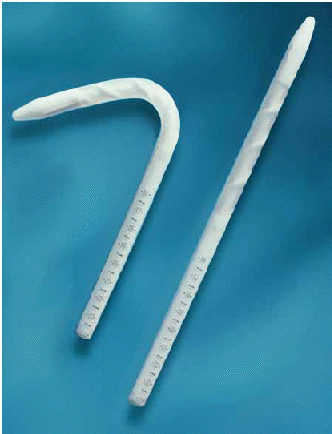
There are three kinds of penile implants (Fig. 1): soft-silicone, semi-rigid (malleable and mechanic) and hydraulic. The latter consists of two types: the two-piece inflatable and the three-piece inflatable.


Figure 1. Examples of penile implants. Above, hydraulic; below, semi-rigid rods. Source: Mulcahy JJ (Ed.) (2006). Male Sexual Function: A Guide to Clinical Management. 2nd Edition.


The installation of a three-piece hydraulic penile gadget is complicated. It requires a reservoir placed in the abdominal cavity. Urologists tend to recommend this type, for it provides the best rigidity and flaccidity. Once it is installed, the macho is ready to go, like the inner tube of your bike. Pump up to use it and deflate it when you finish off your bionic job.

If you or your urologist want to avoid having a sac stuck deep in your belly, then the two-piece prosthesis is your choice.

Any adult human male who wants a PVC penis should have an idea of what such an operation entails. Video 2 gives a good idea what is to have an inflatable implant stuffed into the penis. Ouch!! It must be hell the post-operatory recovery!!! Homo sapiens is a strange beast indeed!! And stupid too!!


                                  Video 2. Inflatable penile implant for impotence.


If you males out there want to have a cyborg´s penis that would make you feel a sexual Popeye, go ahead. Video 3 shows how it works. There is no guarantee that it will work 100% sure.                


                                        Video 3. How penile implants work.

         
My question is: What would it happen if the implant blows up inside the female whilst you are busy huffing and puffing?    

Another question is: What are the complications of having these devices implanted? The most frequent ones are infections  by bacteria.

Unless Dr.  Leonard McCoy operates you with a tricorder up in deep space, here on Earth you will always be exposed to invasive microbes as soon as your skin is open. This is one of the biggest problems at hospitals. 

To solve this problem, some companies have come up with a solution: applying patented anti-bacterial coatings to the prosthesis. As if not were enough the pollution we are already subjected to under the hood of mankind´s wonderful screwed up civilization.

So you machos now  have a few solutions to choose from to treat your ED and get the stress off your mind. One is to sweep up your trash out of your dirty mind. Another could be reaching out for the pills, injections or vacuums. Third, listen to what your wife or girlfriend has to say.

And finally you could enriched the bank account of a greedy physician by letting him turn your manhood muscle into a  bionic rocket and join the Cube´s collective in Star Trek! It is all up to you. 

Beam me up, Mr. Scotty!!!                            


                                        References

Kandeel FR (Ed.) (2007). Male Sexual Dysfunction: Pathophysiology and Treatment. Informa Healthcare, New York. 541 pp. Scimino Index: 3.

Mulcahy JJ (Ed.) (2006). Male Sexual Function: A Guide to Clinical Management. 2nd Edition. Humana Press, New Jersey. 494 pp. Scimino Index: 3.

Probert JL (Ed.) (2009). Urology. An Atlas of Investigation and Diagnosis. Clinical Publishing, Oxford. 125 pp. Scimino Index: 3.

Wessells H, Lue TF & McAninch JW (1996). Penile length in the flaccid and erect states: guidelines for penile augmentation. J. Urol., 156 (3): 995-997. Scimino Index: 3.


Disclaimer: The information on this site is for educational and entertainment purposes only. There is no intent, express or implied, to promote illegal activities. We assume no liability for the potential actions of any third party. All data compiled here has been gathered from, and is available through, independent public sources.

viernes, 30 de marzo de 2012

EL AGUA CLORADA DE LAS PISCINAS: UN RIESGO PARA LA SALUD, TERCERA PARTE

¡LA TERCERA PARTE DE LA SERIE "EL AGUA CLORADA DE LAS PISCINAS: UN RIESGO PARA LA SALUD" ESTA DISPONIBLE!


Las piscinas de agua clorada no solo son un caldo tóxico sino también masas de agua llenas de excrementos de gente.  Detrás de la transparencia del agua de una piscina se encuentra el riesgo a la salud.

El experto genético toxicólogo Prof. Dr. Michael J. Plewa de la Universidad de Illinois, recomienda “Mantenerse lejos de las piscinas de agua clorada, especialmente los niños.”